
How PIKUS Designs Products for Different Types of Users
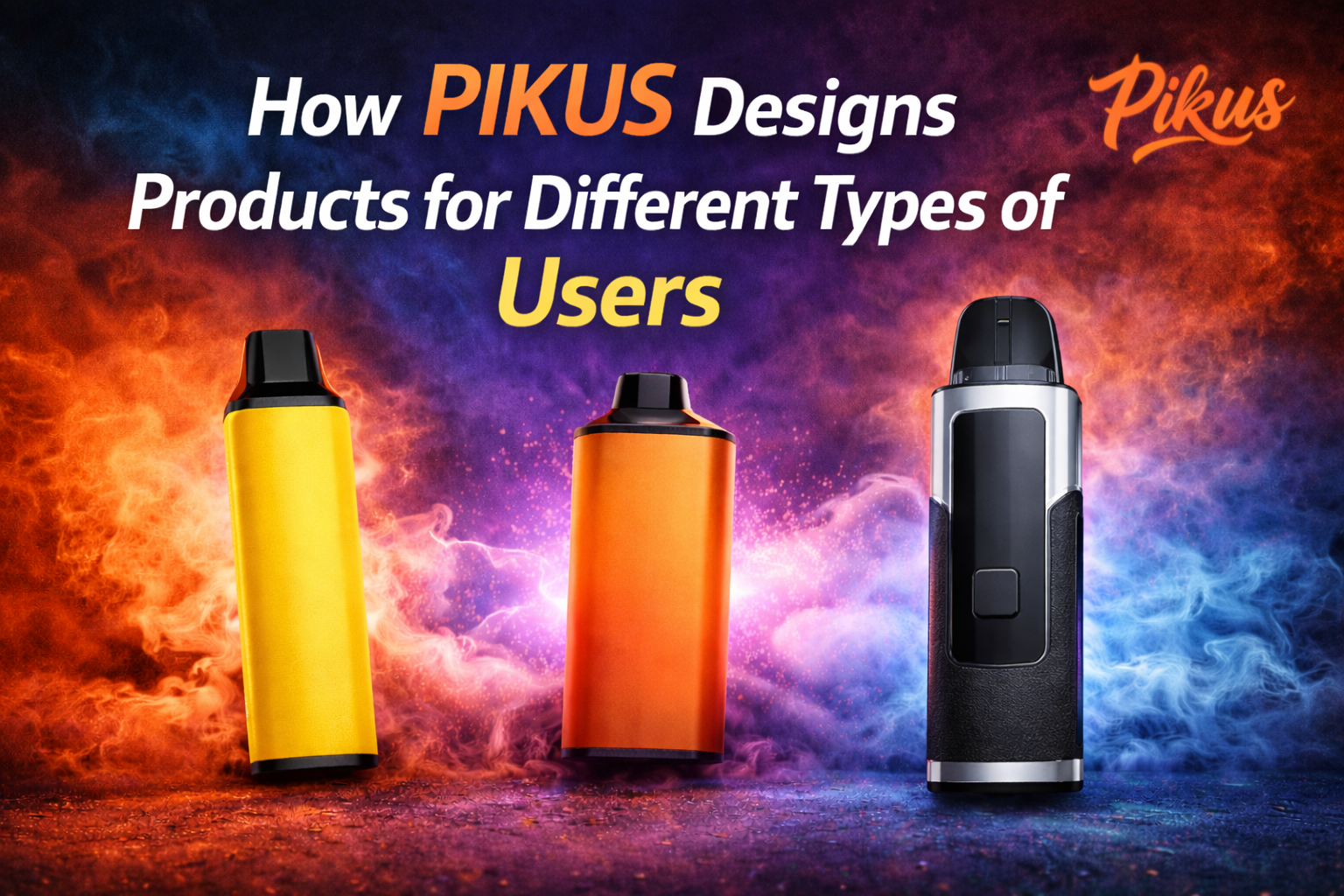
Not All Vape Users Are the Same — And That’s the Point
One of the biggest mistakes in the vape industry is assuming that every user wants the same thing.
They don’t.
Some people want simplicity.
Others want performance.
Some care about cost over time.
Others just want something that works without thinking.
Yet many brands still try to solve everything with one product.
That’s where PIKUS takes a different approach.
Instead of designing for the “average user,” PIKUS designs for real user behavior—the way people actually vape, not how brands assume they do.
And that leads to a much more interesting question:
👉 What does it actually mean to design a vape product around the user?
Understanding the Three Core Vape User Types
Before you can design a product, you need to understand who it’s for.
Across the market, most users fall into three clear categories.
1. The Convenience-First User
This is the largest group—and often the most overlooked.
They don’t care about:
- Technical specs
- Advanced features
- Customization
They care about one thing:
👉 Ease
They want:
- No setup
- No maintenance
- No friction
Just pick it up and use it.
2. The Performance-Focused User
This group pays attention.
They notice:
- Flavor consistency
- Vapor quality
- Device reliability
They’ve likely tried multiple products—and they know when something feels off.
For them, vaping isn’t just functional.
It’s experiential.
3. The Value-Oriented User
This is where things get more intentional.
These users think about:
- Cost over time
- Device lifespan
- Efficiency
They’re not just asking:
“Does it work?”
They’re asking:
“Is this sustainable long-term?”
Designing Around Real Usage (Not Just Specs)
Here’s where product design gets interesting.
A lot of brands design based on:
- Puff count
- Battery size
- Feature lists
But those don’t always translate to a better experience.
What actually matters is:
- How consistent the device feels
- How long it performs well
- How easy it is to use day-to-day
That’s the lens PIKUS applies across its product lineup.
Simplicity Done Right: Designing for the Everyday User
For convenience-first users, simplicity isn’t a feature—it’s the entire product.
Devices designed for this group need to:
- Work immediately
- Require no learning
- Feel intuitive
But here’s the challenge:
👉 Simplicity is easy to say, but hard to execute well.
Because removing complexity without sacrificing performance takes careful design.
This is where entry-level disposable devices come in—not as “basic” products, but as purpose-built tools for frictionless use.
Performance Without Complexity: The Middle Ground
This is where things get more nuanced.
Performance-focused users want:
- Better flavor
- More consistent output
- Reliable battery behavior
But they don’t necessarily want complexity.
They’re not looking for:
- Endless settings
- Over-engineered systems
They want something that feels refined, not complicated.
This is where balanced devices—like mid-range high-performance disposables—fit in.
They’re designed to:
- Deliver consistency
- Maintain simplicity
- Avoid overextension
Because in reality, pushing specs too far often creates more problems than it solves.
Designing for Long-Term Use: The System Approach
For value-oriented users, the equation changes.
Now it’s about:
- Longevity
- Efficiency
- Sustainability
This is where system-based products—like pod systems—become relevant.
Instead of replacing the entire device:
- You keep the core system
- You replace only what’s needed
That shift alone changes:
- Cost structure
- Usage habits
- Overall experience
And more importantly—it introduces control.
Why One Product Can’t Serve Everyone
This is where many brands fall short.
They try to build:
👉 One device for all users
But that creates compromises.
A product optimized for:
- Simplicity won’t maximize performance
- Performance-focused devices may lose ease of use
- System devices require a different mindset altogether
So instead of forcing one solution…
PIKUS builds a lineup.
A Structured Product Ecosystem (Not Just Products)
What’s interesting about PIKUS is that its products aren’t isolated.
They’re part of a user journey.
Stage 1: Entry (Simplicity)
Users start with:
- Easy-to-use devices
- No learning curve
Stage 2: Refinement (Performance)
As expectations grow:
- Users look for consistency
- They notice quality differences
Stage 3: Optimization (System Use)
Eventually:
- Some users shift toward efficiency
- They adopt systems over disposables
This progression isn’t forced.
It happens naturally—as users become more aware of what they want.
The Real Insight: Experience Over Specification
Here’s the part most brands miss.
Users don’t remember:
- Puff count
- Battery size
- Technical specs
They remember:
- Whether it felt consistent
- Whether it lasted as expected
- Whether it was frustrating to use
That’s the real product.
And designing for that requires:
- Understanding behavior
- Anticipating expectations
- Prioritizing experience
Related Reads (Internal Linking)
If you’re exploring how different devices fit your needs:
- Which PIKUS Device Is Right for You?
- How to Choose a Pod System in 2026
- Disposable vs Pod Systems: Which One Makes Sense?
Where the Industry Is Headed
The vape industry is evolving.
From:
- Feature-driven design
To: - Experience-driven design
From:
- One-size-fits-all products
To: - Segmented product ecosystems
And brands that understand user diversity will be the ones that last.
Final Thought
Good products don’t just work.
They fit.
And the brands that understand that—like PIKUS—aren’t just building devices.
They’re building experiences around how people actually use them.
FAQ
Why do vape brands create different types of devices?
Because users have different needs—some prioritize convenience, while others prioritize performance or long-term value.
What type of vape is best for beginners?
Simple disposable devices are usually best for beginners due to ease of use.
Are pod systems better than disposables?
Pod systems offer better long-term value and consistency, while disposables offer convenience.
How do I know which vape is right for me?
It depends on your usage habits—whether you value simplicity, performance, or cost efficiency.