
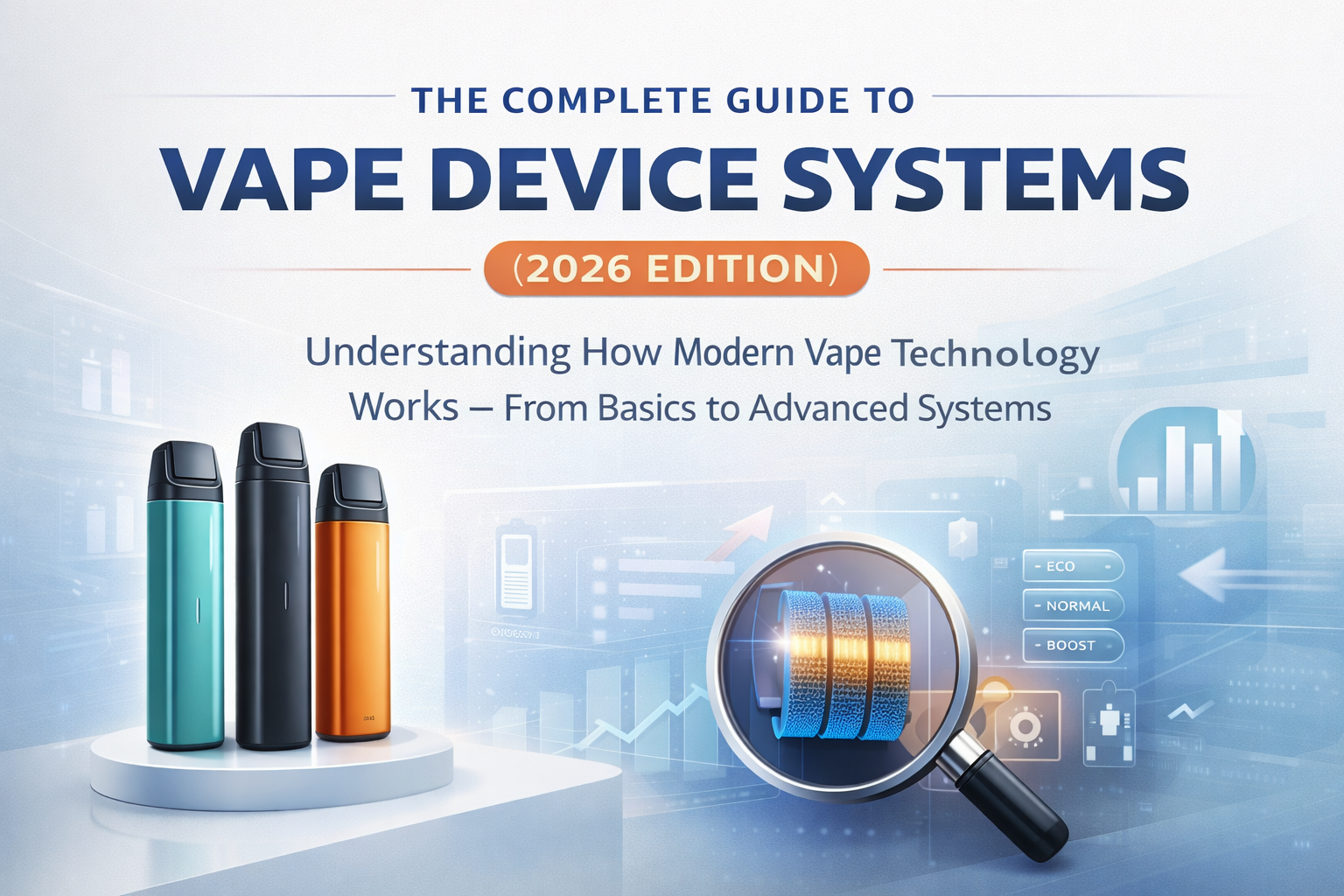
The Complete Guide to Vape Device Systems (2026 Edition)
Why Device Systems Matter More Than Ever
Most people think vaping is simple — inhale, enjoy, repeat.
But behind every smooth puff is a carefully engineered system. From airflow precision to coil structure and power delivery, modern vape devices are built like compact performance machines.
Understanding device systems helps you:
- Choose better products
- Improve consistency
- Avoid common issues
- Identify high-quality designs
At PIKUS, device engineering isn’t an afterthought — it’s the foundation.
What Is a Vape Device System?
A vape device system is the combination of components that work together to deliver vapor.
Core Components:
- Battery system
- Coil (heating element)
- E-liquid reservoir
- Airflow system
- Activation mechanism
- Power regulation
Each part plays a role — but it’s the integration that defines performance.
Battery Systems: The Power Behind Every Puff
The battery determines:
- Device lifespan
- Vapor consistency
- Power delivery stability
Types of Battery Systems
1. Fixed Battery (Most Disposables)
- Pre-charged or rechargeable
- Designed for simplicity
2. Rechargeable High-Capacity Systems
- Found in high puff devices (e.g., 20,000–55,000+ puffs)
- Supports extended use without performance drop
What Matters Most:
- Output stability (not just size)
- Efficient power delivery
- Safety protections
👉 Poor battery systems = weak hits & inconsistent flavor
Coil Technology: Where Flavor Is Created
The coil is the heart of the vape.
It heats e-liquid into vapor — and its design directly impacts:
- Flavor clarity
- Vapor density
- Longevity
Types of Coils
Standard Coil
- Traditional wire
- Less surface area
- Faster burnout
Mesh Coil (Modern Standard)
- Wider surface area
- Even heating
- Better flavor + longer lifespan
Dual Mesh Coil Systems
- Two heating layers
- Increased vapor production
- Enhanced consistency
👉 This is where premium devices separate themselves.
Airflow Systems: The Hidden Performance Driver
Airflow is often overlooked — but it’s critical.
It controls:
- Draw resistance
- Vapor temperature
- Flavor intensity
Types of Airflow Systems
1. Fixed Airflow
- Pre-set draw
- Optimized for convenience
2. Adjustable Airflow
- User-controlled
- Allows customization (tight vs airy draw)
Why It Matters:
- Too tight → harsh hits
- Too loose → weak flavor
A well-designed airflow system balances:
✔ Smooth draw
✔ Flavor concentration
✔ Vapor density
Activation Systems: How the Device Responds
Draw-Activated Systems (Most Common)
- Inhale to activate
- No buttons
- Seamless experience
Button-Activated Systems
- Manual control
- Often paired with adjustable settings
Smart Activation (Emerging Trend)
- Sensors optimize output automatically
- Improves efficiency and consistency
Power Modes: The New Standard in High-End Devices
Modern devices are no longer “one setting fits all.”
Multi-Power Modes
- Eco Mode → longer battery life
- Normal Mode → balanced performance
- Boost Mode → maximum vapor & flavor
Why This Matters:
- Adapts to user preference
- Extends device lifespan
- Enhances experience control
👉 This is a key feature in next-gen high puff devices.
E-Liquid Delivery Systems
A good device doesn’t just hold e-liquid — it manages it.
Key Factors:
- Wick absorption efficiency
- Leak prevention
- Consistent saturation
Advanced Systems Include:
- Anti-dry hit protection
- Optimized cotton wicking
- Sealed internal structures
High Puff Device Engineering (20,000–55,000+ Puffs)
High puff devices are a different category altogether.
They require:
- Larger e-liquid capacity
- Rechargeable battery systems
- Efficient coil longevity
- Smart power management
Challenges Manufacturers Must Solve:
- Flavor consistency over time
- Coil durability
- Battery reliability
👉 Not all high puff devices are equal — engineering matters.
System Integration: What Actually Defines Quality
A great vape device isn’t about one feature — it’s about how everything works together.
High-Quality Device Systems Deliver:
- Consistent flavor from first puff to last
- Stable power output
- Smooth airflow balance
- Long-lasting coil performance
Poorly Designed Systems Result In:
- Burnt taste
- Weak vapor
- Leaking
- Early device failure
How to Choose a High-Quality Vape Device System
When evaluating a device, look beyond marketing.
Key Indicators:
✔ Mesh or dual mesh coil
✔ Rechargeable battery (for high puff devices)
✔ Airflow optimization
✔ Multiple power modes
✔ Leak-resistant design
Why Device Systems Are the Future of Vaping
The industry is shifting from:
➡ Simple disposables
➡ To engineered performance systems
Consumers now expect:
- Better flavor
- Longer lifespan
- More control
- Consistent experience
Brands that invest in device engineering will lead the market.
Final Thoughts
Understanding vape device systems changes how you choose and experience products.
It’s no longer about just “puffs” — it’s about:
- Engineering
- Performance
- Consistency
That’s where real value lies.
Looking to upgrade beyond basic devices?
Explore how modern device systems are redefining performance — or connect with the team to see how PIKUS technology fits into your product lineup.